



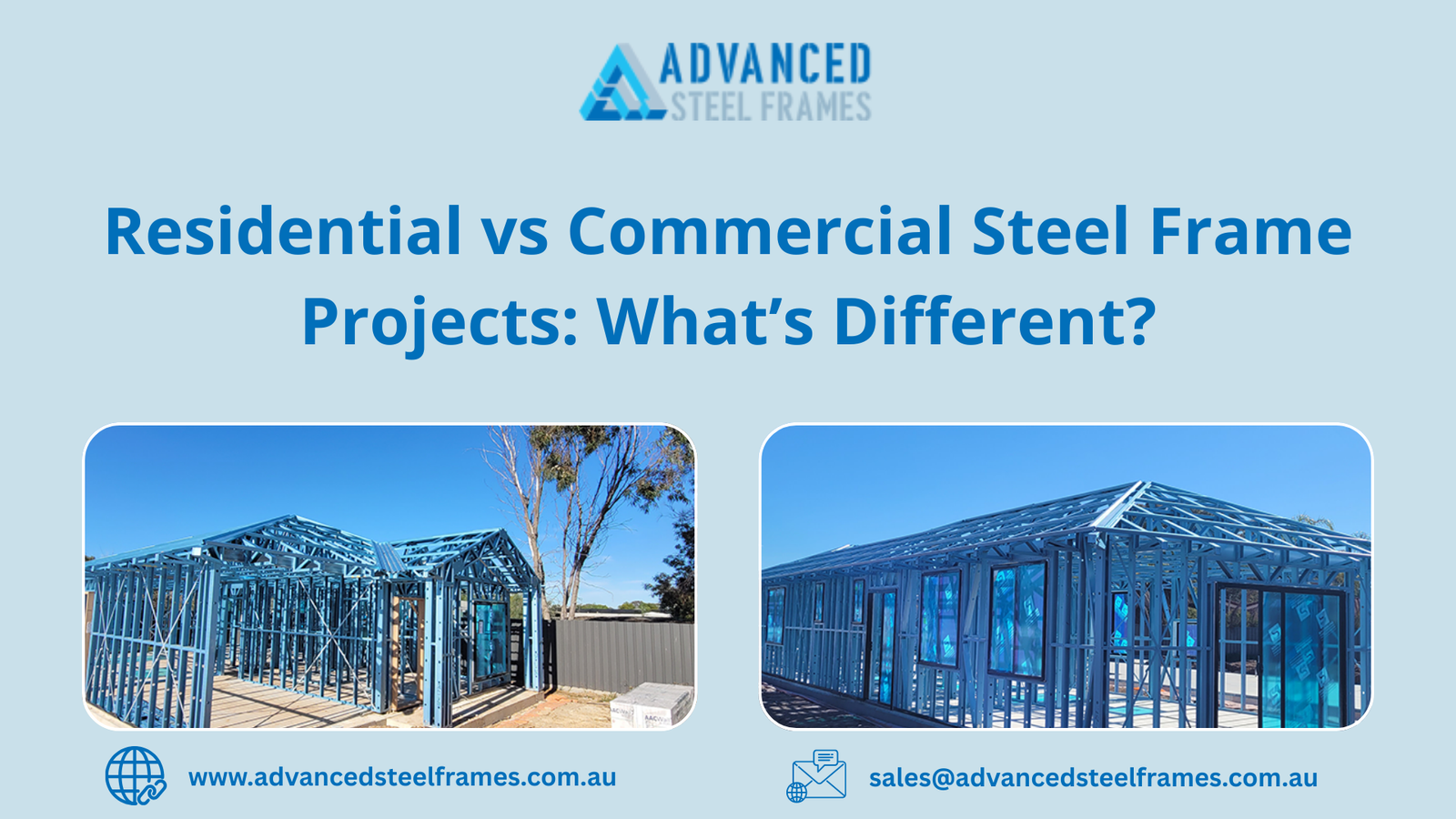
Steel framing has become a trusted construction solution across Australia, valued for its strength, precision, and long-term performance. While the core material remains the same, residential and commercial steel frame projects differ significantly in design approach, engineering requirements, timelines, and compliance standards. Understanding these differences helps homeowners, builders, and developers make better decisions before starting a project.
Key Differences Between Residential and Commercial Steel Frame Construction
Project Purpose and Design Requirements
The most noticeable difference between residential and commercial steel frame projects lies in their purpose. Residential buildings are designed primarily for comfort, lifestyle, and visual appeal. Homes often include custom layouts, varied rooflines, open living areas, and design features that reflect personal taste. Steel frames in residential projects are engineered to support these design choices while maintaining structural stability.
Commercial steel frame projects, on the other hand, focus heavily on functionality and scale. Warehouses, office buildings, retail outlets, and industrial structures require open spans, higher load-bearing capacity, and the ability to support heavy equipment or high foot traffic. Design flexibility still exists, but it is often guided by operational efficiency rather than aesthetics.
Structural Load and Engineering Complexity
Residential steel frames are engineered to support standard loads such as roofing, internal walls, wind pressure, and everyday living use. While precision is critical, the overall structural demands are usually more predictable and less intense.
Commercial projects introduce far more complex engineering challenges. These structures must accommodate larger spans, multiple levels, heavy machinery, and stricter safety margins. Steel frames for commercial use are designed to handle higher loads, seismic considerations, and long-term structural stress. This often involves thicker steel sections, reinforced connections, and detailed engineering documentation.
Compliance and Regulatory Standards
Both residential and commercial steel framing must comply with Australian Standards, but commercial projects are subject to a broader and stricter regulatory framework. Residential builds typically follow local council guidelines, building codes, and energy efficiency requirements suited to housing.
Commercial construction must meet additional regulations related to fire resistance, accessibility, workplace safety, and occupancy capacity. Fire ratings, evacuation routes, and structural certifications play a much larger role. These added requirements influence how steel frames are designed, manufactured, and installed.
Construction Timelines and Project Scale
Residential steel frame projects are generally faster to manufacture and install due to their smaller scale. Prefabricated steel frames allow for quicker on-site assembly, reduced waste, and fewer delays caused by weather. For homeowners, this means faster build times and more predictable schedules.
Commercial steel frame projects operate on a much larger timeline. Coordination between engineers, architects, project managers, and multiple trades is essential. Manufacturing, logistics, and installation are carefully staged to meet deadlines while maintaining safety and quality. Although steel framing still speeds up construction compared to traditional materials, commercial builds require detailed planning and phased execution.
Cost Considerations and Budget Planning
In residential projects, steel framing is often chosen for its durability, termite resistance, and long-term cost savings. While the upfront cost may be slightly higher than timber, reduced maintenance and consistent quality make it a practical investment.
Commercial steel frame projects involve higher material volumes, advanced engineering, and compliance costs. However, steel framing helps control expenses by reducing rework, minimising on-site labour time, and supporting faster project completion. For developers, this efficiency can significantly impact overall return on investment.
Customisation vs Standardisation
Residential steel frames often allow a high level of customisation. From unique floor plans to architectural features, steel framing adapts well to personalised designs without compromising strength.
Commercial projects tend to favour standardisation. Repeated structural elements, modular designs, and uniform framing systems help improve efficiency and reduce costs. This standardised approach also simplifies future expansions or modifications.
Long-Term Performance and Maintenance
Both residential and commercial steel frames offer excellent long-term performance. Steel does not warp, shrink, or attract termites, making it suitable for Australia’s varied climate conditions.
In commercial environments, durability becomes even more important due to constant use and operational demands. Steel frames provide consistent performance over decades, supporting heavy usage with minimal maintenance. Residential owners benefit from the same reliability, gaining peace of mind and long-term structural integrity.
Choosing the Right Steel Framing Partner
Whether the project is residential or commercial, working with an experienced steel frame manufacturer is essential. The ability to understand different project requirements, engineering standards, and timelines makes a significant difference in outcomes.
Advanced Steel Frames supports both residential and commercial projects by delivering precision-engineered steel framing solutions tailored to each build type. From custom homes to large-scale developments, the right expertise ensures compliance, efficiency, and quality at every stage.
Final Thoughts
Residential and commercial steel frame projects may use the same material, but their execution differs in many important ways. Design priorities, engineering complexity, regulations, budgets, and timelines all shape how steel framing is applied. Understanding these differences allows builders and property owners to plan effectively and maximise the benefits of steel construction.
With experienced suppliers like Advanced Steel Frames, both residential homeowners and commercial developers can take advantage of steel framing’s strength, flexibility, and long-term value. As modern construction continues to evolve, steel framing remains a reliable foundation for projects of all sizes.