



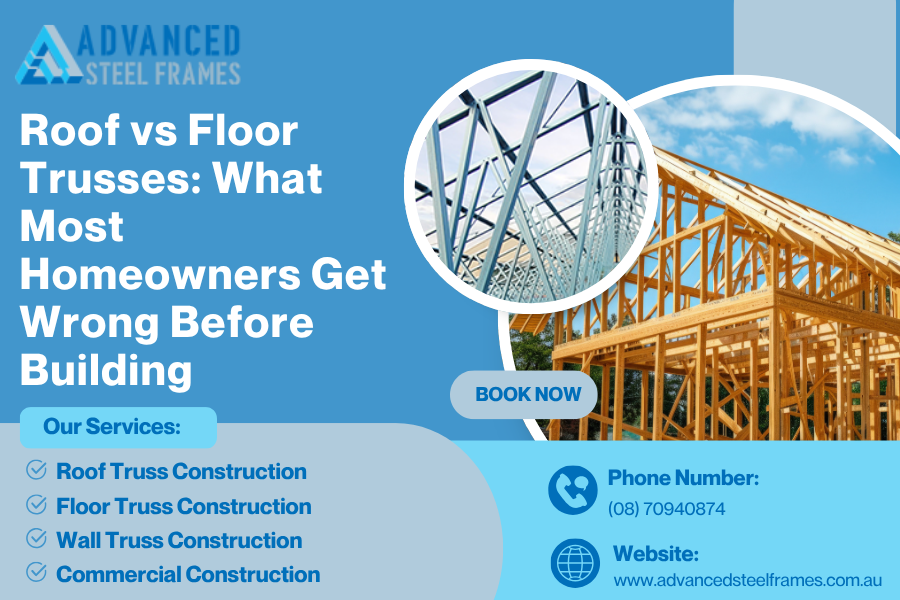
When planning a new build or renovation, structural components often don’t get the attention they deserve. Many homeowners focus on design and finishes, but the real strength of a building lies in its framework.
Two key elements that often cause confusion are Roof Truss Construction and Floor Truss Construction. While both are essential, they serve very different purposes.
Understanding these differences can help you make better decisions and avoid costly mistakes.
What Are Trusses and Why Do They Matter?
Trusses are engineered frameworks designed to support loads efficiently. They are used in both roofs and floors to distribute weight evenly and provide stability.
Because they are pre-designed and manufactured, trusses offer consistency, strength, and faster installation compared to traditional framing methods.
Understanding Roof Trusses
Roof trusses are designed to support the structure of your roof. They handle the weight of roofing materials, weather conditions, and external forces like wind.
Key Benefits:
- Strong support for roofing systems
- Faster installation compared to traditional methods
- Allows for flexible roof designs
However, poor planning or incorrect installation can lead to long-term structural issues.
Understanding Floor Trusses
Floor trusses are used to support the flooring system of a building. They create a stable base while also allowing space for electrical wiring, plumbing, and ductwork.
Key Benefits:
- Open web design for easy utility installation
- Reduced need for load-bearing walls
- Improved structural efficiency
They are especially useful in modern homes where open layouts are preferred.
Common Mistakes Homeowners Make
Many people assume both types of trusses are interchangeable, but that’s not the case. Here are some common mistakes:
- Choosing the wrong truss type for the project
- Ignoring load requirements
- Overlooking future modifications
- Hiring inexperienced installers
These mistakes can lead to delays, higher costs, and structural problems.
Why Quality Materials and Expertise Matter
The strength of your building depends on the quality of materials and the precision of installation. Poor-quality components or incorrect assembly can compromise safety.
Working with experienced providers like Advanced Steel Frames ensures that your truss system is designed and installed to meet modern standards.
Final Thoughts
Trusses play a crucial role in the stability and performance of any structure. Understanding the difference between roof and floor systems helps you make smarter decisions during construction.
By planning carefully and choosing the right solutions, you can ensure a safer, stronger, and more efficient building.
❓ Frequently Asked Questions (FAQs)
1. What is the main difference between roof and floor trusses?
Roof trusses support the roof, while floor trusses support the flooring system.
2. Are trusses better than traditional framing?
Yes, they are often more efficient, consistent, and faster to install.
3. Can trusses be customized?
Yes, they can be designed to suit specific building requirements.
4. Do trusses reduce construction time?
Yes, prefabricated trusses speed up the building process.
5. Are trusses suitable for all types of homes?
Most modern homes benefit from truss systems, especially for open layouts.
6. Do trusses require maintenance?
They generally require minimal maintenance when properly installed.